What I offer
I guide clients through gentle body-based (somatic) techniques that help you tune into your breath, notice your sensations, and understand the signals your nervous system is sending.

Body-Breath Connection
The Body–Breath Connection helps you gently return your attention to your body—the place where your lived experience resides—and offers a simple, effective way to focus your awareness in support of healing and empowerment. As you learn to follow the rhythm of your breath and the sensations of your body, the mind begins to settle, stress softens, and clarity becomes easier to access.
This practice supports deeper, more restorative sleep, steadier emotions, and a steadier sense of being anchored in yourself throughout the day. Over time, many people notice increased energy, more balanced breathing patterns, and an overall feeling of being more grounded and present in their bodies.

Vagus Nerve Support
Vagal Harmony sessions use gentle, non‑invasive practices that support vagal tone through breath, mindful movement, and supportive postures and holds. Each session helps the body send steady cues of safety to the brain, inviting the nervous system out of survival mode and into a state of ease.
Based on current neuroscience, strengthening vagal tone plays a key role in regulating inflammation—one of the body’s primary pathways for healing and also a contributing factor in many chronic conditions. By activating the vagus nerve’s anti‑inflammatory reflex, these practices can help the body shift toward repair, improve physiological resilience, and support more stable autonomic functioning. Over time, many people experience more restorative sleep, improved digestion, emotional regulation, and a steadier internal baseline that supports long‑term wellbeing.

Meditation Practices
Meditation and mindfulness practices offer a gentle way to slow down, turn inward, and reconnect with the present moment. Through guided attention, breath awareness, and simple sensory anchoring, these practices help quiet mental noise and soften the body’s stress response. Over time, many people experience clearer thinking, steadier emotions, and a more spacious sense of awareness that supports both inner calm and daily resilience.
What we know from heart–brain coherence research shows that when the breath and emotional state shift into a more regulated rhythm, the heart begins sending more organized, harmonious signals to the brain. This coherence supports improved focus, emotional stability, and overall physiological balance. It also helps the body move out of chronic stress patterns that can contribute to inflammation—a factor linked to many long‑term health challenges. Meditation becomes not just a calming practice, but a way of supporting the body’s natural capacity for regulation, repair, and wellbeing.
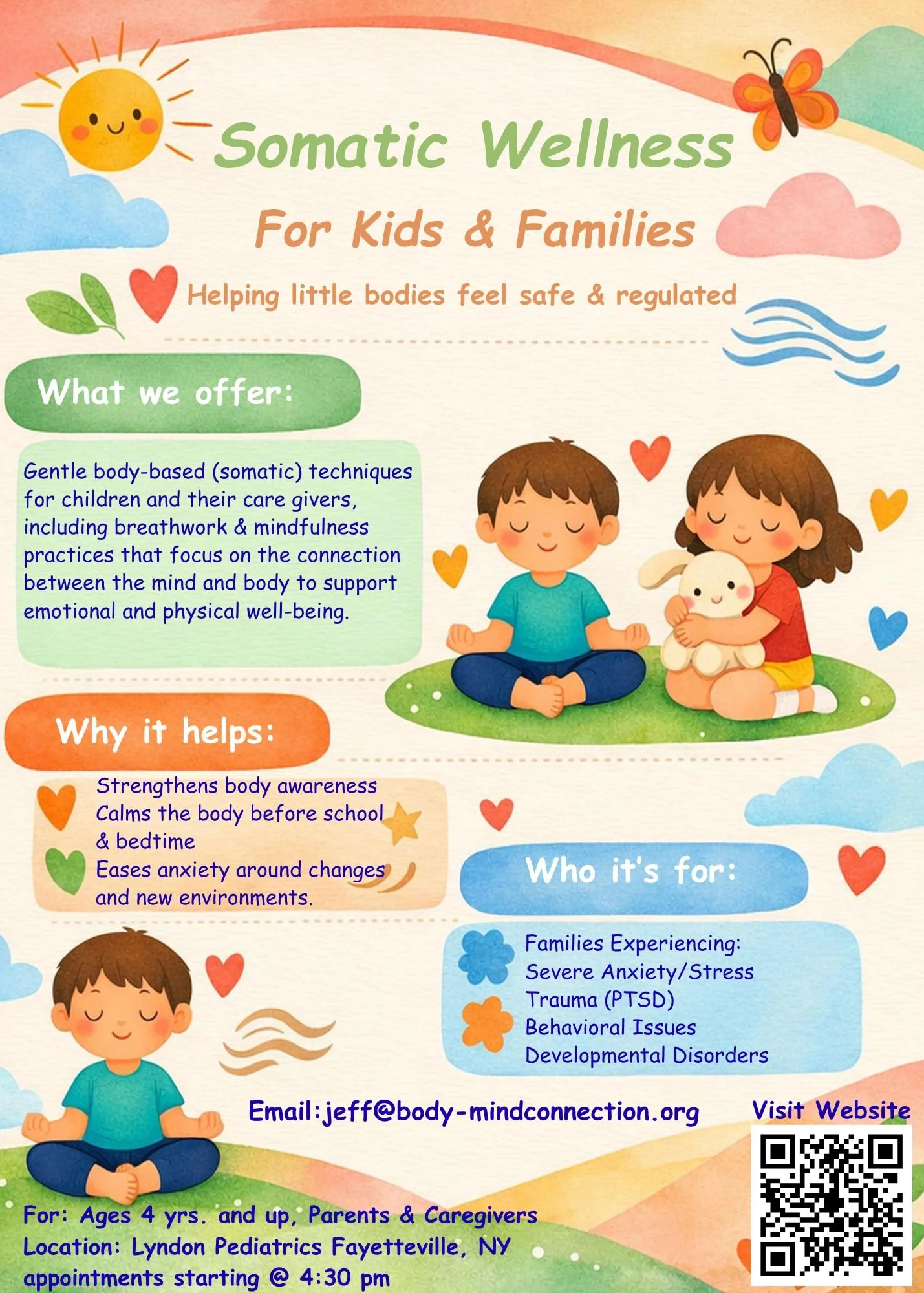
For Kids and Families